
Islamic Studies
The Department of Islamic Studies attempts to advance knowledge by offering specialized educational programs in Islamic sciences, including interpretation, Hadith, and Islamic thought, while also addressing contemporary issues in Islam. It focuses on promoting academic research by encouraging original and innovative studies in the field of Islamic studies and developing teaching programs. It also strives to build leadership skills in students by equipping them with communication and teamwork skills, as well as the personal qualities required for leadership, enhancing their role as active members of society. The department places great importance on moral development by instilling Islamic values and solid ethical principles, which contributes to promoting the values of tolerance and peaceful coexistence. Furthermore, the department is committed to serving the community by establishing effective partnerships with community institutions and contributing to raising cultural and religious awareness.. .
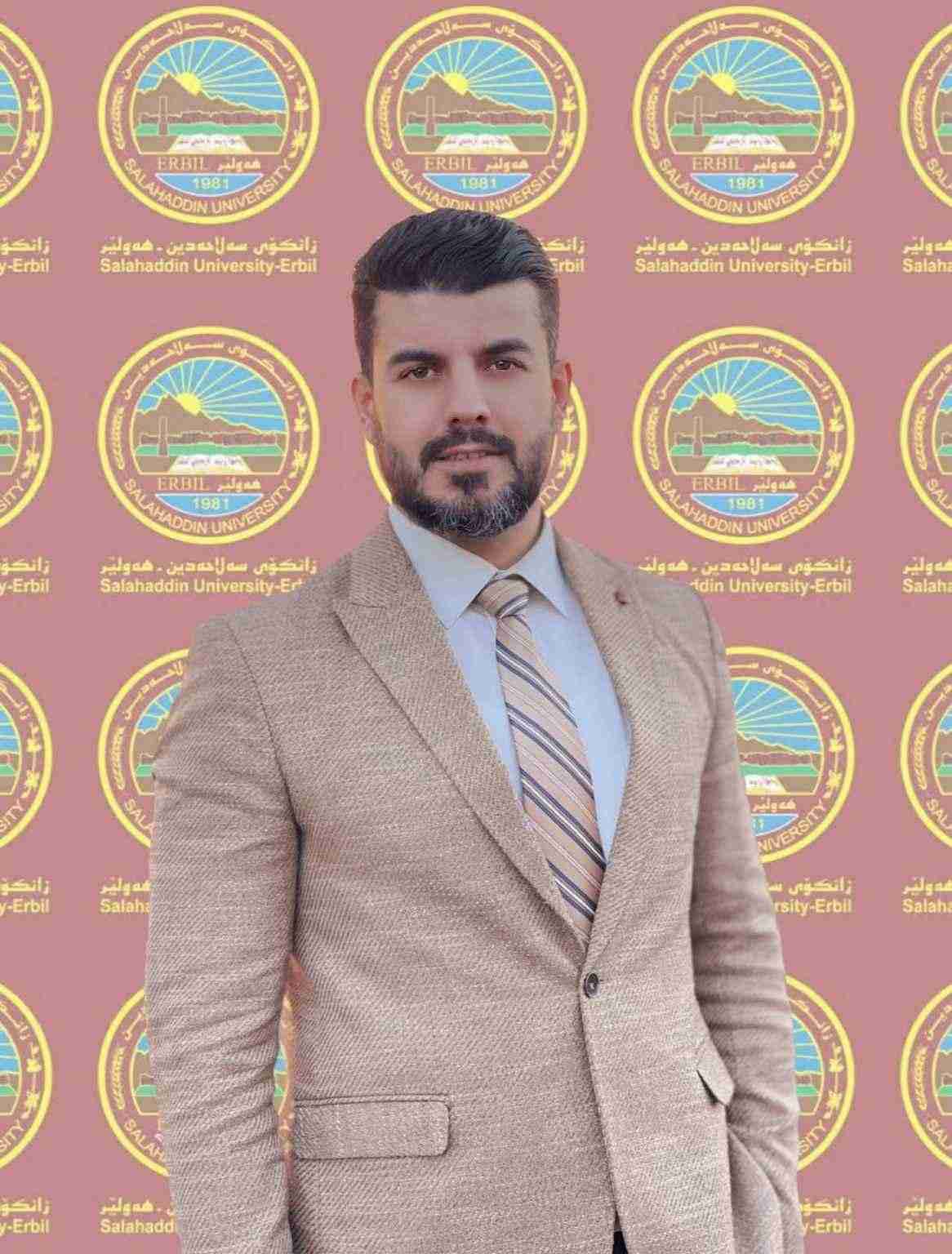
Head of Department: Dr. Hezha Ahmed Najimaldin.
The Department of Islamic Studies seeks to graduate specialists in Islamic interpretation, Hadith, and thought, based on a scientific and cultural educational approach that combines heritage with modernity and links heritage with contemporary requirements. It aims to prepare researchers capable of serving society from a balanced Islamic principal perspective, with a focus on Islamic values and academic research..
Email: [email protected]
Phone: 009647504462471
Vision of the Department of Islamic Studies: The Department of Islamic Studies seeks to be a leading center for teaching and distributing Islamic sciences, such as interpretation, Quranic studies, Hadith studies, and thought, among others. It also contributes to building a society aware and educated of tolerant Islamic values, and to graduating qualified academic cadres who contribute to societal progress and support peaceful coexistence.
Mission
The mission of the Department of Islamic Studies: To provide distinguished education that combines Islamic law, humanities, and modern technologies, with a focus on developing scientific research and critical thinking skills. This aims to prepare graduates who are scientifically and morally qualified to be leaders and reformers in society, fulfilling their role in building a nation based on the values of peace, tolerance, and cooperation. The department's curriculum is consistent with a moderate education based on coexistence, understanding, and working in a shared space. g.
Our Graduates will have various job opportunities including the following fields:
-
*Imam and Preaching of the mosque*:
With the ability to provide religious guidance and counseling based on correct scientific and legal foundations.
2. *Teaching in government and private schools and institutes*:
With the ability to educate generations and develop moral and social values.
3. *Teaching in religious and Islamic schools*:
Using their skills in teaching students in religious and Islamic schools, with a focus on preparing students who carry the correct Islamic values.
4. *Job Opportunities in the Private Sector*:
Excellence in various private sector jobs due to the high level of behavior and high Islamic culture that graduates possess, which makes them a role model in work environments.
5. *Completing postgraduate studies*:
Moving towards scientific research and precise specialization by completing postgraduate studies in the fields the interpretation and sciences of the Holy Quran, Hadith, Islamic thought and other Sharia specializations.
6. *Working in Islamic media*:
Contributing to the preparation of religious and educational programs and presenting them via TV. Channels or electronic platforms. Social media.
7. Sharia and reform consultation in courts, prisons and organizations concerned with human rights issues, women, children, the elderly, people with special needs and religious and national components of society.
Degree Program Overview
The Department of Islamic studies undergraduate programs in islamic studies sciences and general islamic. These programs are intended to offer students a comprehensive Islamic studies and life sciences education, combining theoretical knowledge with extensive practical experience. Graduates can pursue advanced studies and meet the requirements of careers in academia, research, critical, hadith, and Quran.
Postgraduate Studies
The Department of Islamic Study is committed to equipping graduates at all levels, “Bachelor’s, Master’s, and Doctorate,” with the knowledge, skills, and experiences necessary to thrive in diverse career paths. Our graduates are well-prepared for opportunities in academia, industry, government, and beyond, with a focus on contributing to scientific advancement and societal development. Bachelor of Islamic Scienses (B.Sc.) in Islamic Studies Graduates of the B.Sc. program possess foundational knowledge and practical skills that open doors to a variety of career opportunities: Master of Science (M.Sc.) in Islamic Studies M.Sc. graduates are highly sought after for specialized roles requiring advanced expertise and research experience:
Program learning outcome
Graduates from the Department of Islamic Studies at Salahaddin University-Erbil will achieve the following learning outcomes upon successful completion of the General Islamic Study or Islamic Science programs: Comprehensive Knowledge Demonstrate extensive understanding of core Islamic study concepts, including Ulum Al-Quran, Hadith, thinking, critical. Critical Thinking and Problem-Solving Apply critical thinking skills and scientific reasoning to design experiments, collect and analyze data, and interpret findings. Graduates will be capable of solving Islamic study problems and contributing to new scientific discoveries. Lifelong Learning and Adaptability Engage in lifelong learning to stay current with advances in biological sciences and emerging technologies. Graduates will demonstrate adaptability to new scientific methods and concepts, fostering continuous professional development. Research Skills Conduct independent research and contribute to scientific progress by formulating hypotheses, conducting experiments, and analyzing results. Graduates will be prepared to pursue advanced studies or research-focused careers. By achieving these outcomes, graduates from the Department of Islamic Studies will be well-prepared to address in islamic studies.
Both degree programs are four-year, full-time Bachelor of Science (B.Sc.) programs structured according to the European Credit Transfer and Accumulation System (ECTS). Each academic year is divided into two semesters, with students completing 30 ECTS credits per semester. Years 1 and 2 focus on foundational courses in Islamic Study, and essential skills (e.g., computer skills and academic writing). Years 3 and 4 encompass electives, research projects, and specialized and advanced courses customized to each program.
Admissions
The Department of Islamic Studies offers two types of study options for prospective students, ensuring accessibility and flexibility based on individual circumstances: Zankoline (government-funded) Study
Description: This option provides free tuition for students who meet the eligibility criteria and are accepted through the general centralized admission system, known as "Zancoline." Eligibility: Applicants must meet the academic requirements of the Ministry of Higher Education and Scientific Research. Selection is competitive and based on high school scores, particularly in scientific subjects. Benefits: Exemption from tuition fees. Access to complete university services and facilities. Parallel Study (Self-Funded) Description: This option allows students who do not secure a Zankoline seat to pursue their studies by paying a tuition fee. Tuition Fee: 3,000,000 IQD per year. Eligibility: Students must meet the minimum academic requirements for admission to the Islamic study program. This option provides additional opportunities for students to catch up on the Zankoline criteria. Benefits: Access to the same high-quality education, resources, and facilities as Zancoline students. Students can pursue their academic goals without being limited by centralized admission quotas. Admission Requirements for Both Tracks Academic Qualifications: Completion of high school with a focus on the science. Minimum GPA as determined by the Ministry of Higher Education. Application Process: Apply through the centralized admission system for Zankoline Submit required documents, including transcripts, identification, and certificates. Language Proficiency: Basic proficiency in Arabic, as several courses are delivered in Arabic. Kurdish language proficiency is also beneficial.- Zankoline (government-funded) Study
- Description: This option provides free tuition for students who meet the eligibility criteria and are accepted through the general centralized admission system, known as "Zancoline."
- Eligibility:
- Applicants must meet the academic requirements of the Ministry of Higher Education and Scientific Research.
- Selection is competitive and based on high school scores, particularly in scientific subjects.
- Benefits:
- Exemption from tuition fees.
- Access to complete university services and facilities.
- Parallel Study (Self-Funded)
- Description: This option allows students who do not secure a Zankoline seat to pursue their studies by paying a tuition fee.
- Tuition Fee: 3,000,000 IQD per year.
- Eligibility:
- Students must meet the minimum academic requirements for admission to the Biology program.
- This option provides additional opportunities for students to catch up on the Zankoline criteria.
- Benefits:
- Access to the same high-quality education, resources, and facilities as Zancoline students.
- Students can pursue their academic goals without being limited by centralized admission quotas.
Admission Requirements for Both Tracks
- Academic Qualifications:
- Completion of high school with a focus on the science track (biology, chemistry, and physics).
- Minimum GPA as determined by the Ministry of Higher Education.
- Application Process:
- Apply through the centralized admission system for Zankoline
- Submit required documents, including transcripts, identification, and certificates.
- Language Proficiency:
- Basic proficiency in English, as several courses are delivered in English.
- Kurdish language proficiency is also beneficial.
Graduate Employability
The Department of Islamic Study is committed to equipping graduates at all levels, “Bachelor’s, Master’s, and Doctorate,” with the knowledge, skills, and experiences necessary to thrive in diverse career paths. Our graduates are well-prepared for opportunities in academia, industry, government, and beyond, with a focus on contributing to scientific advancement and societal development. Bachelor of Islamic Scienses (B.Sc.) in Islamic Studies Graduates of the B.Sc. program possess foundational knowledge and practical skills that open doors to a variety of career opportunities: Master of Science (M.Sc.) in Islamic Studies M.Sc. graduates are highly sought after for specialized roles requiring advanced expertise and research experience:
Academic Advising
Academic advising in the Islamic Studies department is a service designed to help students choose courses and understand the study plan, while providing educational, psychological, and social support. It aims to qualify them academically and professionally to be capable of serving society in various fields of Sharia.
Internship Opportunities
.
Career Services
The Islamic Studies department is not limited to religious vocations only; rather, it opens up broad horizons in the fields of education, law, Islamic economics, media, and Sharia consultations.
Department Location Second Floor, College of Islamic Sciences Building, Salahaddin University Presidency Street / Erbil.