
Religious Education
The Department of Religious Education is considered as one of the core scientific departments at the College of Islamic Sciences at Salahaddin University-Erbil. It was established in the academic year 2016–2017 in response to an urgent societal need and a contemporary necessity dictated by intellectual and social transformations, with the aim of serving religion, building the individual, and uplifting society. Since its establishment, the department has taken upon itself the mission of creating a solid educational environment based on the values of brotherhood, love, peace, tolerance, and unity, while rejecting manifestations of hatred, animosity, and selfishness. The department seeks to be a guiding platform that contributes to spreading moderate religious awareness and addresses negative social phenomena through scientific research, graduation projects, master's theses, doctoral dissertations, and researchers' initiatives. .
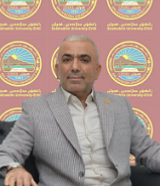
In the name of Allah,
the Most Gracious, the Most Merciful Praise be to Allah, who taught by the pen, taught man what he did not know, and peace and blessings be upon the best of those sent as a teacher and educator, our master Muhammad, and upon his family and all his companions. I am pleased to present this speech to our dear students, esteemed colleagues, and everyone who cares about the future of education, especially in the field of religious education, which is considered the cornerstone in building the individual and society. The Department of Religious Education was established to be a scientific and educational platform that contributes to the consolidation of tolerant Islamic principles, enhances moral values in the hearts of generations, and strives to prepare scientific competencies capable of keeping pace with the demands of the era, armed with faith, knowledge, moderation, and belonging. We do not see the administration of this department as merely an administrative task, but rather as a comprehensive mission aimed at shaping the student's character spiritually, intellectually, and morally within a scientific environment that adheres to academic and professional standards and relies on continuous innovation, research, and development. And since the department believes that religious education is the foundation for building individual and collective conscience, it seeks to instill the values of justice, mercy, belonging, and good citizenship and to cultivate the spirit of dialogue, tolerance, and peaceful coexistence in the hearts of its students. In conclusion, I extend my heartfelt thanks and appreciation to the professors of the department, its students, and everyone who participates in this blessed journey. And I ask Allah Almighty to grant us all success in achieving the noble goals we strive for and to make the graduates of this department leaders in the fields of knowledge, education, and reform. Head of the Religious Education Department: Dr. Sardar Ahmad Qader. College of Islamic Sciences – Salahaddin University – Erbil .
• Preparing students who possess knowledge, faith, belonging, awareness, and the ability to positively interact with the changes of the era. • Building a generation that draws from Islamic and human sciences and contributes to spreading the values of tolerance, moderation, and coexistence among the components of society. • Rooting the attachment to religion and homeland and deepening the awareness of the nation's history and its major issues. • Establishing a culture of coexistence and societal peace and fostering civilizational interaction among various groups and intellectual orientations.
VisionTo establish the Department of Religious Education as a leading academic center for preparing and qualifying educational and advocacy personnel, combining religious and educational knowledge, and promoting a moderate Islamic identity and noble moral values..
The Department of Religious Education aims to prepare graduates capable of: • Acquiring comprehensive knowledge in creed, jurisprudence, interpretation, prophetic biography, and educational sciences. • Employing teaching skills and effective communication in educational and missionary environments. • Analyzing intellectual and religious issues in a critical scientific manner and managing discussions with objectivity and respect. • Represent Islamic values in individual and social behavior, such as tolerance, justice, and sincerity. • Conducting rigorous scientific research that contributes to the development of Islamic curricula and provides realistic solutions to contemporary problems. • Engaging in educational and missionary institutions and working as teachers, preachers, and educational counselors in schools, mosques, and reformative and community institutions.
Degree Program Overview
Undoubtedly, the establishment of any academic department within a university responds to genuine societal needs shaped by contemporary developments and demands. It opens new horizons for advancement and growth. From this perspective, the Department of Religious Education at the College of Islamic Sciences, Salah University, was founded to contribute to the formation of a society grounded in solid intellectual, ethical, and moral foundations. The department offers a high-quality academic curriculum meticulously designed to meet the standards of modern education. This curriculum is supported by complementary programs that inject vitality into the educational process, helping bring theory to life and broaden students’ awareness and understanding. These programs serve as a bridge between theoretical learning and practical application, thereby enhancing the impact and sustainability of educational outcomes over time. .
Postgraduate Studies
The department’s mission extends beyond merely graduating qualified individuals; it actively works to empower graduates to enter various sectors of the job market. To this end, specialized committees have been formed to follow up with alumni and guide them in their professional paths. These efforts have successfully opened up diverse career opportunities for graduates in teaching, education, religious leadership (imamate), public speaking (khutbah), administration, as well as in private enterprises, marketing, and sales. This diversity in employment prospects reflects the department’s strong emphasis on values-based education, equipping students with moral, ethical, and civic grounding. As a result, graduates demonstrate professional flexibility and emotional, social, and vocational intelligence—alongside national loyalty, precision, integrity, and a spirit of service.
Program learning outcome
The department’s educational approach extends beyond the classroom to include hands-on field training programs aimed at refining students’ practical skills and enhancing their competencies. These programs encompass workshops, seminars, and training courses delivered by faculty and experts from a wide range of disciplines. This interdisciplinary exposure deepens students’ academic and cultural engagement while enriching their personal and professional experiences.
Admissions
1. Academic Programs and Educational Methodology Undoubtedly, the establishment of any academic department within a university responds to genuine societal needs shaped by contemporary developments and demands. It opens new horizons for advancement and growth. From this perspective, the Department of Religious Education at the College of Islamic Sciences, Salah University, was founded to contribute to the formation of a society grounded in solid intellectual, ethical, and moral foundations. The department offers a high-quality academic curriculum meticulously designed to meet the standards of modern education. This curriculum is supported by complementary programs that inject vitality into the educational process, helping bring theory to life and broaden students’ awareness and understanding. These programs serve as a bridge between theoretical learning and practical application, thereby enhancing the impact and sustainability of educational outcomes over time.Graduate Employability
Academic Vision of the Department of Religious Education – College of Islamic Sciences / Salah University – Erbil 1. Academic Programs and Educational Methodology Undoubtedly, the establishment of any academic department within a university responds to genuine societal needs shaped by contemporary developments and demands. It opens new horizons for advancement and growth. From this perspective, the Department of Religious Education at the College of Islamic Sciences, Salah University, was founded to contribute to the formation of a society grounded in solid intellectual, ethical, and moral foundations. The department offers a high-quality academic curriculum meticulously designed to meet the standards of modern education. This curriculum is supported by complementary programs that inject vitality into the educational process, helping bring theory to life and broaden students’ awareness and understanding. These programs serve as a bridge between theoretical learning and practical application, thereby enhancing the impact and sustainability of educational outcomes over time. ................................................................................................................................................ 2. Employment Services and Graduate Empowerment The department’s mission extends beyond merely graduating qualified individuals; it actively works to empower graduates to enter various sectors of the job market. To this end, specialized committees have been formed to follow up with alumni and guide them in their professional paths. These efforts have successfully opened up diverse career opportunities for graduates in teaching, education, religious leadership (imamate), public speaking (khutbah), administration, as well as in private enterprises, marketing, and sales. This diversity in employment prospects reflects the department’s strong emphasis on values-based education, equipping students with moral, ethical, and civic grounding. As a result, graduates demonstrate professional flexibility and emotional, social, and vocational intelligence—alongside national loyalty, precision, integrity, and a spirit of service. ................................................................................................................................................ 3. Practical Training and Skills Development The department’s educational approach extends beyond the classroom to include hands-on field training programs aimed at refining students’ practical skills and enhancing their competencies. These programs encompass workshops, seminars, and training courses delivered by faculty and experts from a wide range of disciplines. This interdisciplinary exposure deepens students’ academic and cultural engagement while enriching their personal and professional experiences. Field training also includes educational excursions to culturally and socially diverse environments—such as visits to religious sites of other faiths, prisons, orphanages, and elderly care centers. These experiences have had a profound effect on students’ cultural and social awareness, fostering a deeper understanding of human diversity and community needs. ................................................................................................................................................ 4. Academic Advising and Continuous Guidance The department places strong emphasis on academic advising through specialized committees dedicated to guiding students and supporting their educational and professional journeys. One such committee—the Advisory Committee—offers both moral and academic support, responds to student inquiries, and provides tailored guidance for academic and career planning, ensuring students stay focused on their goals. Guidance is provided on a daily and weekly basis through structured mentoring sessions led by faculty members. These sessions foster a dynamic learning environment rooted in mutual respect, collaboration, and holistic development. ................................................................................................................................................ Conclusion Through its comprehensive educational system, innovative curricula, and dedicated academic and community-based services, the Department of Religious Education stands as a vital contributor to the formation of a well-educated, balanced, and socially committed generation. Thus, the department transcends its academic role to fulfill a broader developmental mission—one that serves the community and strengthens its intellectual and social resilience.
Academic Advising
Internship Opportunities
Career Services